
For decades, the split-toe Tabi shoe has existed as a quiet but unyielding symbol of avant-garde fashion. Its forked silhouette an echo of both modern and ancient times, transcending its status as a mere shoe to become one of the most recognisable signatures in contemporary design. Yet for years, the very distinctiveness that made the Tabi a cultural touchstone also rendered it vulnerable. A recent ruling by the European Union Intellectual Property Office (EUIPO) has now affirmed what the fashion world long understood: the shape itself is a form of intellectual property. In a landmark decision, Maison Margiela has secured a decisive legal victory, invalidating seven competing EU design registrations and reinforcing the principle that a brand’s design language is entitled to the same protection as its name.
To understand the weight of this ruling, one must first trace the lineage of the Tabi. Its origins do not lie in a Parisian atelier, but in 15th-century Japan, where the jika-tabi (a split-toed cotton sock reinforced with a rubber sole) was worn by farmers, carpenters, and labourers for functional grip and balance. It was a utilitarian item, designed for movement and practicality.
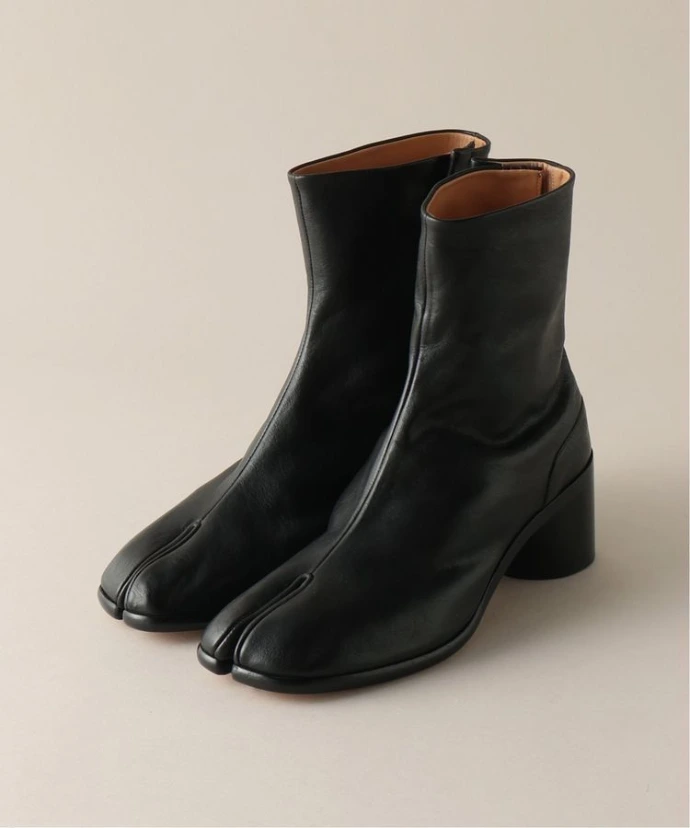
That changed in 1989. Martin Margiela, a Belgian designer known for his deconstructive approach to fashion, presented his debut collection for his eponymous label. The show, held in a vacant lot in Paris, was a watershed moment in fashion history. It was there that Margiela introduced his reimagination of the jika-tabi: a leather boot with a distinctive cleft between the first and second toes, finished with a wooden heel wrapped in lambskin. What was once humble workwear was now transformed into a subversive luxury item. The Tabi boot was not merely a shoe; it was a manifesto against the conventions of footwear, demanding the wearer to embrace something that was simultaneously historical and radically fashion-forward.


For years, the Tabi remained a totem of fashion insiders, a secret handshake for those fluent in the language of Margiela’s conceptualism. Its allure lay in its ambiguity, the split toe was often visible, but the garment’s extreme form meant it was never merely decorative. It challenged the wearer to reconsider the architecture of the foot.
By the 2010s, Tabi's influence had permeated mainstream fashion. Its distinctive shape began appearing on celebrities, in street style photography, and eventually across social media platforms, where it became a visual shorthand for avant-garde taste. This newfound visibility, however, carried a consequence. As demand surged, so too did the proliferation of replicas. Fast-fashion retailers, independent sellers, and even established brands began producing their own split-toe shoes, creating designs that echoed Margiela’s signature with enough variation to test the boundaries of existing design laws.
The influx of imitations did not merely dilute the market, it threatened the economic and artistic integrity of Maison Margiela’s legacy. For a brand whose identity is so closely tied to a singular design, each replica represented not just lost revenue, but a weakening of the cultural link between the silhouette and its originator. It was this erosion of distinctiveness that compelled the brand to seek legal recourse, arguing that the Tabi’s shape had acquired such a strong reputation that it merited protection as a distinctive trade mark.


Setting Precedent for Design Language
The EUIPO’s recent decision marks a significant evolution in European intellectual property law. By invalidating seven competing design registrations on the grounds that they lacked sufficient distinctiveness when compared to Margiela’s original, the court affirmed that protection can extend beyond a logo or a label to encompass a product’s overall design language. This ruling signals that the Tabi’s silhouette is not merely a functional form but a distinctive identifier of commercial origin, a recognition that carries considerable weight in an industry where imitation often outpaces innovation.
For luxury fashion houses, the decision establishes a vital precedent. It acknowledges that a design, when consistently used and culturally recognised, can function as a de facto trademark. This is particularly significant in an era of “dupe culture,” where fast-fashion platforms have refined the practice of replicating high-end design aesthetics while avoiding direct trademark infringement. The ruling suggests that European authorities are increasingly willing to view the copying of a distinctive design language as a form of unfair competition, rather than merely a gap in legal protection.
Yet even as this victory shores up Margiela’s rights within the European Union, it also illuminates the fragmented nature of fashion’s legal landscape. The path to securing similar protection in the United States remains uncertain, where trademark law traditionally places a higher burden on proving that a product’s shape has acquired “secondary meaning” distinct from its aesthetic function. This asymmetry leaves global brands navigating a patchwork of protections, where a design can be safeguarded in one market but remain exposed in another.
In this sense, the Tabi’s journey mirrors broader tensions within the global fashion industry. Like Ghana’s successful effort to secure Geographical Indication status for Kente cloth, protecting the fabric not merely as a textile but as a living emblem of cultural heritage. Maison Margiela’s legal fight underscores a growing recognition that originality, whether rooted in centuries of tradition or in a single transformative moment of design, deserves legal recognition.
For Maison Margiela, the EUIPO ruling offers a measure of stability. It affirms that the Tabi is not merely a product but a proprietary design language that has shaped the visual vocabulary of fashion for more than three decades. For the broader industry, the decision poses a question: if a silhouette can be protected, what other elements of design might be eligible for similar safeguards? As fashion continues to grapple with issues of authenticity, appropriation, and originality, this ruling may well mark the beginning of a new chapter in how intellectual property is understood; not as a peripheral concern, but as central to the preservation of creative identity.