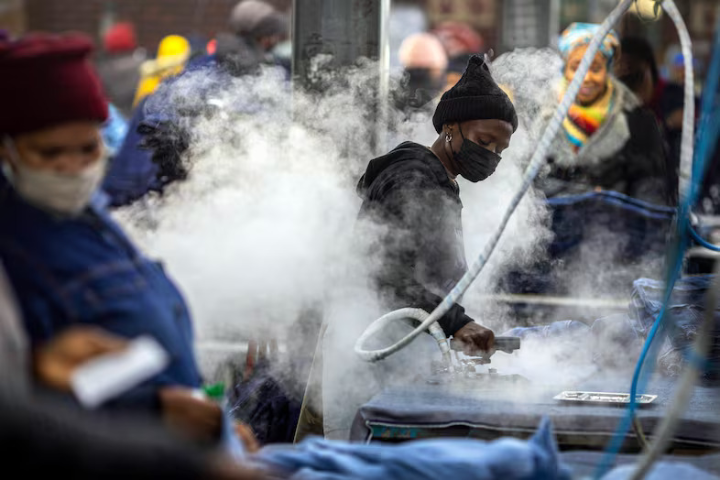
For decades, the garment and textile industry has been a cornerstone of Lesotho’s economy, employing more than 12 000 people and serving as a financial anchor for a web of related industries. Roughly 75% of the country’s textile output is exported to the United States, with smaller volumes reaching neighbouring markets. This export-led model has largely been shaped by trade frameworks such as the African Growth and Opportunity Act (AGOA), which grants eligible sub-Saharan African countries duty-free access to U.S. markets. Yet abrupt shifts in U.S. trade policy in 2025 have pushed this economic lifeline into a state of crisis.
As an AGOA beneficiary, Lesotho became an attractive sourcing destination for global fashion brands, allowing them to directly procure garments and textiles from local factories. The arrangement fuelled job creation, supported household incomes, and strengthened the country’s manufacturing base. That momentum was abruptly disrupted in April 2025, when the United States imposed a punitive 50% tariff on goods imported from Lesotho, the highest rate applied to any country at the time. The sudden increase prompted buyers to freeze orders or redirect production elsewhere, triggering a wave of factory closures and job losses.
The fallout was not confined to isolated facilities; it threatened the entire private-sector textile manufacturing industry. In one stark example, a manufacturer supplying U.S. clients reportedly laid off more than 200 workers, around 40% of its workforce, following the collapse in demand. Several other garment factories were forced to suspend production, and by August 2025 an estimated 7,000 workers had been left without pay. An industry that once accounted for roughly 90 percent of Lesotho’s manufacturing exports suddenly appeared alarmingly fragile, exposed as a house of cards built on preferential trade access.
In July and August 2025, the U.S. partially rolled back the tariff, reducing it from 50% to 15%. For many companies and workers, however, the relief came too late. Months of uncertainty had already resulted in lost contracts, mass layoffs, and market withdrawals that could not easily be reversed. Industry experts also warn that even at 15%, Lesotho remains at a competitive disadvantage compared to other African textile producers facing tariffs as low as 10%, further complicating efforts to revive production and restore buyer confidence.
Beyond factory floors, the economic shock has rippled through communities. In early July 2025, the government declared a two-year “state of disaster” in response to soaring unemployment and widespread financial distress. In a country where many households rely on factory wages, the loss of stable employment extends far beyond individual incomes; it threatens livelihoods, deepens poverty, and raises the risk of long-term social and economic instability. Analysts caution that Lesotho’s already fragile GDP growth could fall below 1% if contraction in its largest export industry persists.
Lesotho’s predicament underscores the risks of over-reliance on a single export destination and on preferential trade agreements. While AGOA played a crucial role in building the country’s manufacturing sector, those gains remain vulnerable to political decisions beyond Lesotho’s control. With the partial tariff reversal offering limited relief, stakeholders increasingly argue that diversification; across markets, industries, and production capabilities is no longer optional but essential.
Whether the textile sector can recover will depend on several factors: whether U.S. retailers resume orders at the new tariff rate, whether the government can secure more favourable trade terms, and whether manufacturers can pivot toward new markets or higher-value production. For now, the tariff shock has erased years of growth, displaced thousands of workers, and destabilised one of Lesotho’s most critical industries. It stands as a sobering reminder that in global fashion supply chains, the fortunes of smaller economies can shift overnight, and that growth built on external preferences can unravel just as quickly when policies change.